

Carl Kesselman, Ph.D.
Principal Investigator
carl at isi.edu
Carl Kesselman is a professor in the University of Southern California (USC) Daniel J. Epstein Department of Industrial and Systems Engineering. He is also a Fellow of the Information Sciences Institute (ISI), its highest honor. A unit of the USC Viterbi School of Engineering, ISI is a world leader in research and development of advanced information processing, computer and communications technologies.
One of the fathers of Grid computing, Kesselman has received numerous awards and honors, including the 2002 R&D 100 award, the 2002 R&D Editors’ Choice award, the Federal Laboratory Consortium (FLC) Award for Excellence in Technology Transfer and the 2002 Ada Lovelace Medal from the British Computing Society for significant information technology contributions. Along with colleagues Ian Foster and Steve Tuecke, Kesselman was named one of the Top 10 Innovators of 2002 by InfoWorld.
In 2003, Kesselman and Foster were named by MIT Technology Review as the creators of one of the “10 technologies that will change the world.” Kesselman received an Honorary Doctorate from the University of Amsterdam in 2006, and the Internet2 Idea and ComputerWorld Horizon awards in 2007. He earned his Ph.D. in Computer Science from the University of California at Los Angeles.

Ian Foster, Ph.D.
Principal Investigator
foster at anl.gov
Ian Foster directs the Computation Institute, a 160-person joint project between the University of Chicago and Argonne National Laboratory. The Institute explores the most difficult high-performance computing and communications issues, including those in bioinformatics, computational economics and data-intensive computing. Foster is also Associate Director of Argonne’s Mathematics and Computer Science Division.
A Computer Science professor at the University of Chicago, he is an Arthur Holly Compton Distinguished Service Professor in Computer Science. Foster is a father of Grid computing (with Carl Kesselman) whose honors include the Lovelace Medal of the British Computing Society and the Gordon Bell Prize for High-Performance Supercomputing. He was awarded his Ph.D. in computer science from Imperial College, University of London in the United Kingdom.
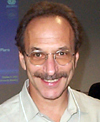
Steven G. Potkin, M.D.
Principal Investigator
sgpotkin at uci.edu
Steven G. Potkin is a professor in the Department of Psychiatry and Human Behavior at the University of California at Irvine (UCI.) He also serves as Robert R. Sprague Chair in Brain Imaging and Director of UCI’s Brain Imaging Center. Dr. Potkin led the Function BIRN testbed, which created tools and methods to standardize functional MRI brain scan datasets across multiple research locations.
His professional honors include Distinguished Fellow of the American Psychiatric Association and Diplomate of the American Board of Psychiatry and Neurology. A former deputy director of a World Health Organization’s Biological Psychiatry unit in the U.S., Dr. Potkin is an expert on schizophrenia, affective disorders and dementia who has co-authored more than 200 peer-reviewed journal articles. He received his MD from Washington University in St. Louis, Missouri, and performed his residency in psychiatry and post doctoral fellowships at Duke University.

Veerasamy “Ravi” Ravichandran, Ph.D.
BIRN Program Officer
veerasamy.ravichandra at nih.gov
Dr. Veerasamy “Ravi” Ravichandran recently joined NIGMS as a program director in the Division of Biomedical Technology, Bioinformatics, and Computational Biology. He manages the Biomedical Informatics Research Network initiative and Biomedical Technology Research Centers (BTRCs) in the areas of informatics and computational biology. Previously, Ravichandran was a scientific fellow in the FDA Laboratory of Molecular Virology. Earlier in his career, he was a staff scientist at NINDS, a research scientist at the National Institute of Standards and Technology (NIST), and an associate research scientist at Yale University School of Medicine and the University of Pennsylvania.
Ravichandran earned a bachelor’s degree in chemistry, master’s degrees in biochemistry and philosophy/clinical biochemistry, and a Ph.D. in biochemistry from the University of Madras in India. He also earned a master’s degree in computer science and bioinformatics from John Hopkins University.
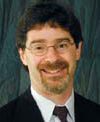
Bruce R. Rosen, M.D., Ph.D.
Principal Investigator
bruce at nmr.mgh.harvard.edu
Bruce R. Rosen is Professor of Radiology at Harvard Medical School and Professor of Health Sciences and Technology at the Harvard-MIT Division of Health Sciences and Technology. He is Director of the Athinoula A. Martinos Center for Biomedical Imaging at the Massachusetts General Hospital in Boston, MA, a collaborative research center formed through the partnership of the Massachusetts General Hospital, Harvard Medical School, and the Massachusetts Institute of Technology (MIT).
An expert in functional imaging, Dr. Rosen has led the BIRN’s Morphometry Test Bed in pooling and analyzing data across neuroimaging sites, to determine possible relationships between anatomical changes and brain function. Dr. Rosen is a Fellow of the International Society of Magnetic Resonance in Medicine, which has awarded him its Gold Medal, and a member of the MIT Chapter of the Scientific Research Society. He received his MD from Drexel University’s Hahnemann Medical College in Philadephia and his PhD in Medical Physics from the Massachusetts Institute of Technology.
 Amy L. Swain, Ph.D.
BIRN Program Officer
swaina at mail.nih.gov
Amy Swain is a Program Director for the Biomedical Technology Programs within the NIGMS Division of Biomedical Technology, Bioinformatics, and Computational Biology. Prior to her recent transition to NIGMS, Dr. Swain was the Acting Director of the NCRR Division of Biomedical Technology and, as a member of that division since 1999, has witnessed and participated in the evolution of BIRN. A leader of the Biomedical Technology Programs, which features a national program of Biomedical Technology Research Centers, Dr. Swain also manages a portfolio of awards in the areas of Technologies for Structural Biology and Informatics Technologies. She has a background in crystallography and before coming to NCRR, was a Principal Scientist at Hoffman-La Roche, Inc. in the area of structure based drug design. Dr. Swain has a Ph.D. in Chemistry from the University of South Carolina with a B.S. in Biology from Frostburg State University. She did post-doctoral research at the National Cancer Institute’s Macromolecular Crystallography program.
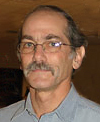
Arthur W. Toga, Ph.D.
Principal Investigator
toga at loni.ucla.edu
Arthur Toga is a professor in the Department of Neurology and an associate dean of the Geffen School of Medicine and associate vice provost at the University of California at Los Angeles (UCLA.) He also directs the 100-person, interdisciplinary Laboratory of Neuro Imaging (LONI), and co-directs the Division of Brain Mapping at UCLA’s Neuropsychiatric Institute.
An expert in neuroimaging, brain mapping and brain atlasing, Dr. Toga has published more than 300 scientific papers and edited seven books. He also founded and edited the journal NeuroImage. Dr. Toga’s honors include the Smithsonian Award for Scientific Achievement and the Giovanni DiChiro Award for Outstanding Scientific Research. Prior to coming to UCLA he was based at Washington University in St. Louis, Missouri. Dr. Toga earned his Ph.D. in neurosciences at St. Louis University.
Executive Committee contact:

Joseph Ames
BIRN Executive Director
jdames at uci.edu

